The Process
How Forgement Works
Forgement fits into how you already train Brazilian Jiu-Jitsu, built around a simple loop: train, log, reflect, understand, and improve. ForgeIQ turns that activity into clear insights and a Development Score, and when you train with a mentor, verification adds trusted confirmation along the way.
What Makes Forgement Different
A New Category of Development
Forgement borrows from many tools but replaces none of them one-for-one. It connects ideas that have always lived in separate places.
Forgement is not
- A course platform
- A learning management system
- A note-taking app
- A habit tracker
- A certification platform
- Social media
Forgement is
A structured development framework that connects deliberate practice, mentorship, measurable progress, and a lasting Development Record in one place.
- Deliberate practice
- Real mentorship
- Measurable progress
- A permanent Development Record
Create Your Development Profile
Every Forgement journey begins with a personal development profile.
Users create an account and establish a profile that serves as the foundation of their Development Record.
Profiles may include:
- Name
- Development interests
- Active pathways
- Goals
- Progress history
- Training activity
- Journal entries
- Completed pathways
The profile becomes a long-term record of growth and development.
James Davis
BJJ Practitioner
Follow a Structured Path
Development pathways provide structure and direction.
Each pathway contains:
- Categories
- Skills
- Milestones
- Competencies
- Progress markers
Practitioners choose Pathways based on their belt level, goals, or a coach's recommendation.
Pathways help answer a simple question: "What should I work on next?"
Development Happens Outside the App
Forgement is not designed to keep users online.
Forgement exists to support real-world development.
Practitioners train, drill, and roll at their academy. After training, they return to Forgement to update progress and capture what they worked on.
Train more. Scroll less.
Build Experience Through Practice
As users progress through a pathway, every practice they capture adds to their Development Record.
Examples may include:
- Skills practiced
- Skills completed
- Tasks performed
- Competencies demonstrated
- Milestones achieved
Progress becomes visible over time.
Users can clearly see:
Morning BJJ Session
Focused on guard retention today. Coach emphasized hip movement and framing. Need to work on recovering guard from side control - getting stuck there too often. Good rolls with higher belts, felt improvement in staying calm under pressure.
Capture Lessons Learned
Growth involves more than checking boxes.
Forgement allows users to record reflections, observations, lessons learned, and training notes.
Journaling helps users:
- Reinforce learning
- Identify patterns
- Work through challenges
- Document successes
- Preserve your development history
These entries become part of the user's personal Development Record.
Support From Mentors & Instructors
When you train with a Mentor, your coach or instructor can review your progress and verify skills you have demonstrated on the mats.
Verification helps:
- Reinforce accountability
- Maintain standards
- Recognize demonstrated ability
- Support structured development
Forgement is designed to support mentorship, not replace it.
Technology can organize development.
People develop people.
Your Development History
Over time, Forgement creates a clear record of growth.
Users can see:
- Active pathways
- Completed pathways
- Skills trained
- Verified competencies
- Journal history
- Development milestones
- Long-term progress
Rather than relying on memory, scattered notes, or disconnected systems, users maintain a single location for their development journey.
Instead of living in memory, scattered notes, or disconnected apps, your development stays in one place that grows with you over the years.
Built for Development, Not Data Collection
Forgement intentionally stores only the information necessary to support development.
We do not sell user data.
We do not run advertisements.
We do not create advertising profiles.
We do not design the platform to maximize screen time.
The goal is not engagement. The goal is development.
Your identity is not the product.
Your attention is not the product.
Your development is the purpose.
See Forgement in Action
The process, inside the product
Brazilian Jiu-Jitsu is our first fully developed discipline. Here is how the same structured framework looks and feels for every learner using Forgement today.
For Practitioners
Development you can actually see.
Forgement gives every learner a structured path, mentor-verified progress, and a permanent record of the work they put in.
A clear path from beginner to mastery.
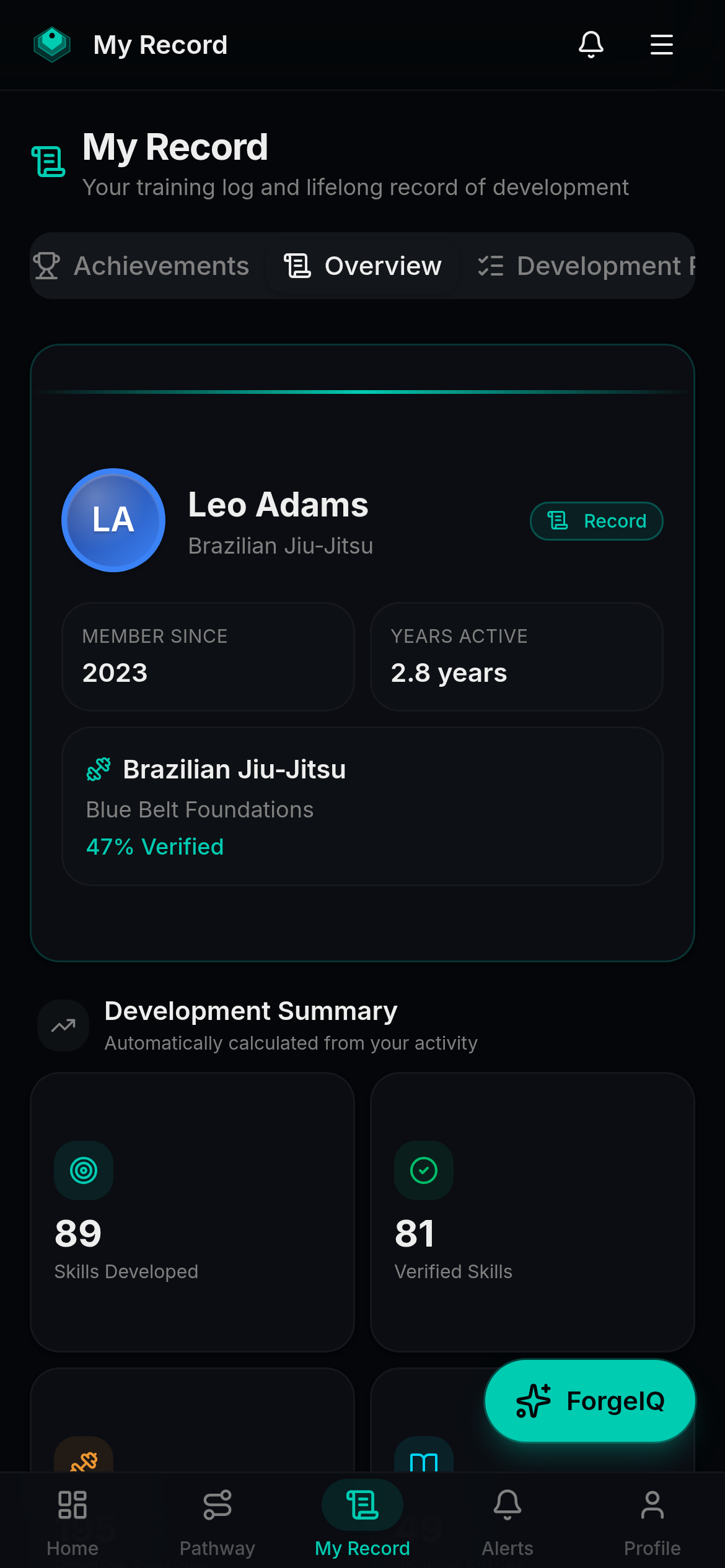
Every discipline is broken into categories, skills, and milestones, so practitioners always know what to work on next and how far they have come.
- Skill-by-skill Pathway with practiced and verified progress
- Belt and stage unlocks that reward real development
- Recommended focus areas tailored to each practitioner
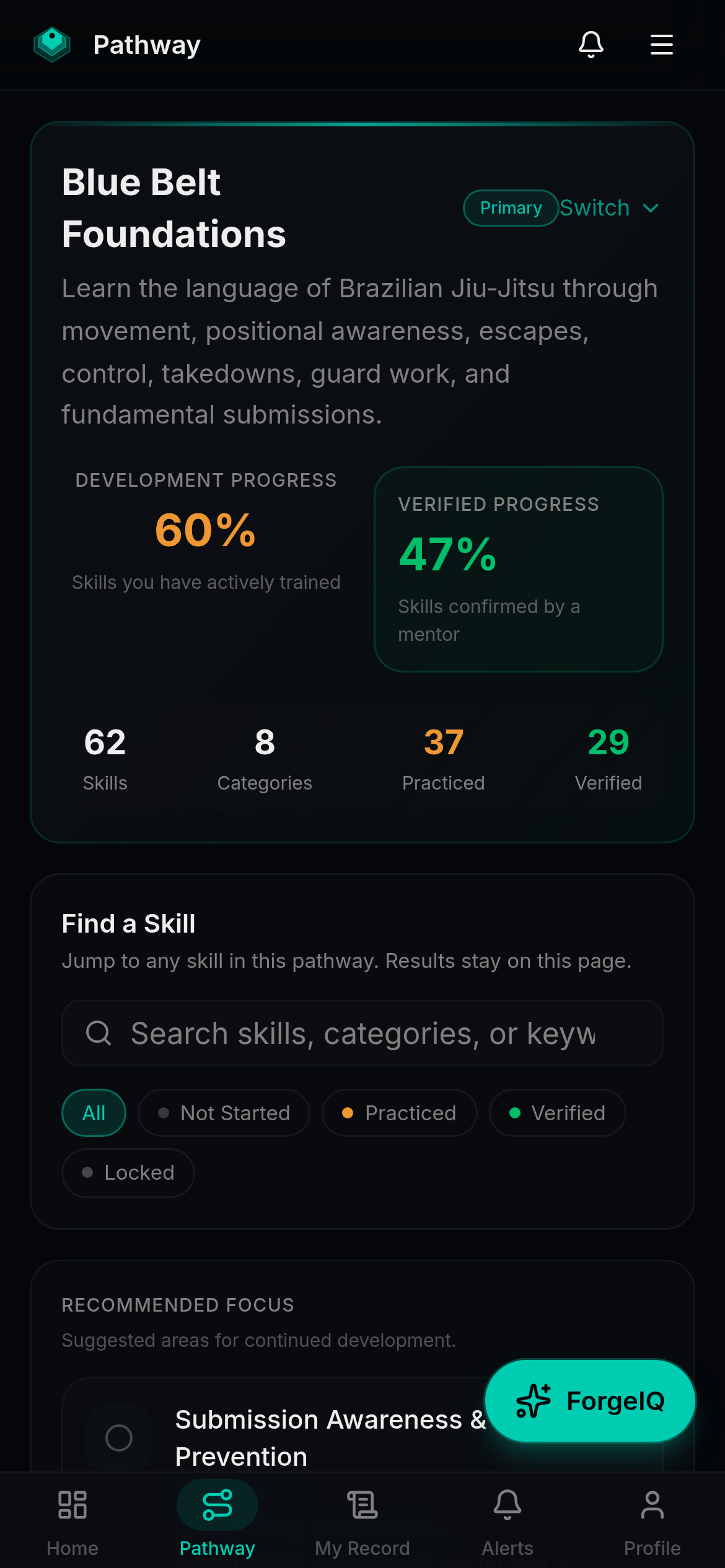
Progress confirmed by a real mentor.
Practice is logged, reflected on, and then verified by a mentor who has seen the work hold up. Each skill becomes a time-stamped, credible record, not a self-reported checkbox.
- Practice timeline, key points, and reflections per skill
- Mentor comments captured alongside every verification
- A verification rate that proves the work is real
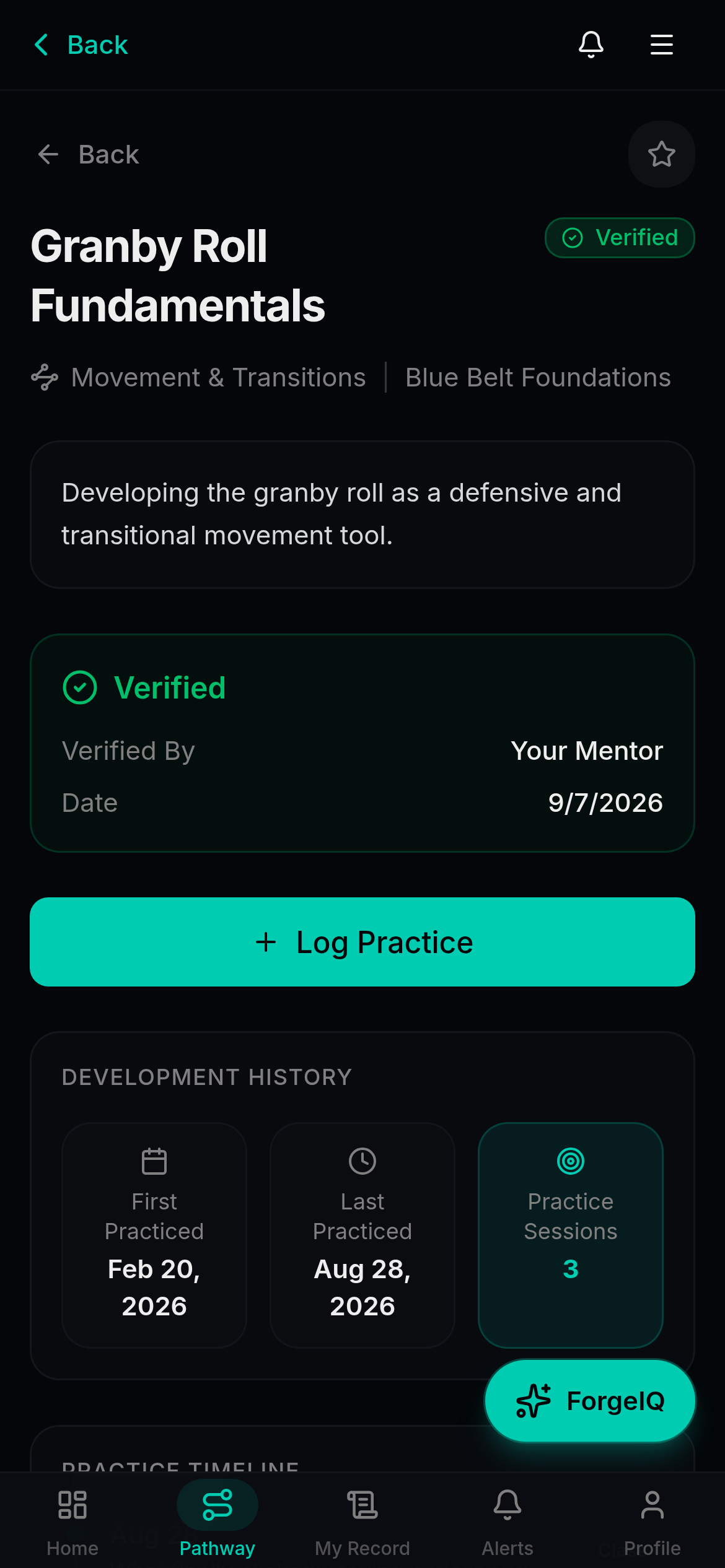
Everything you build, in one record.
A professional record of your development (verified skills, milestones, practice history, achievements, journals, and your complete learning timeline), built automatically from your real activity.
- Skills, milestones, and practice history at a glance
- Achievements and mentor-verified progress in one summary
- A permanent record that follows you throughout your journey
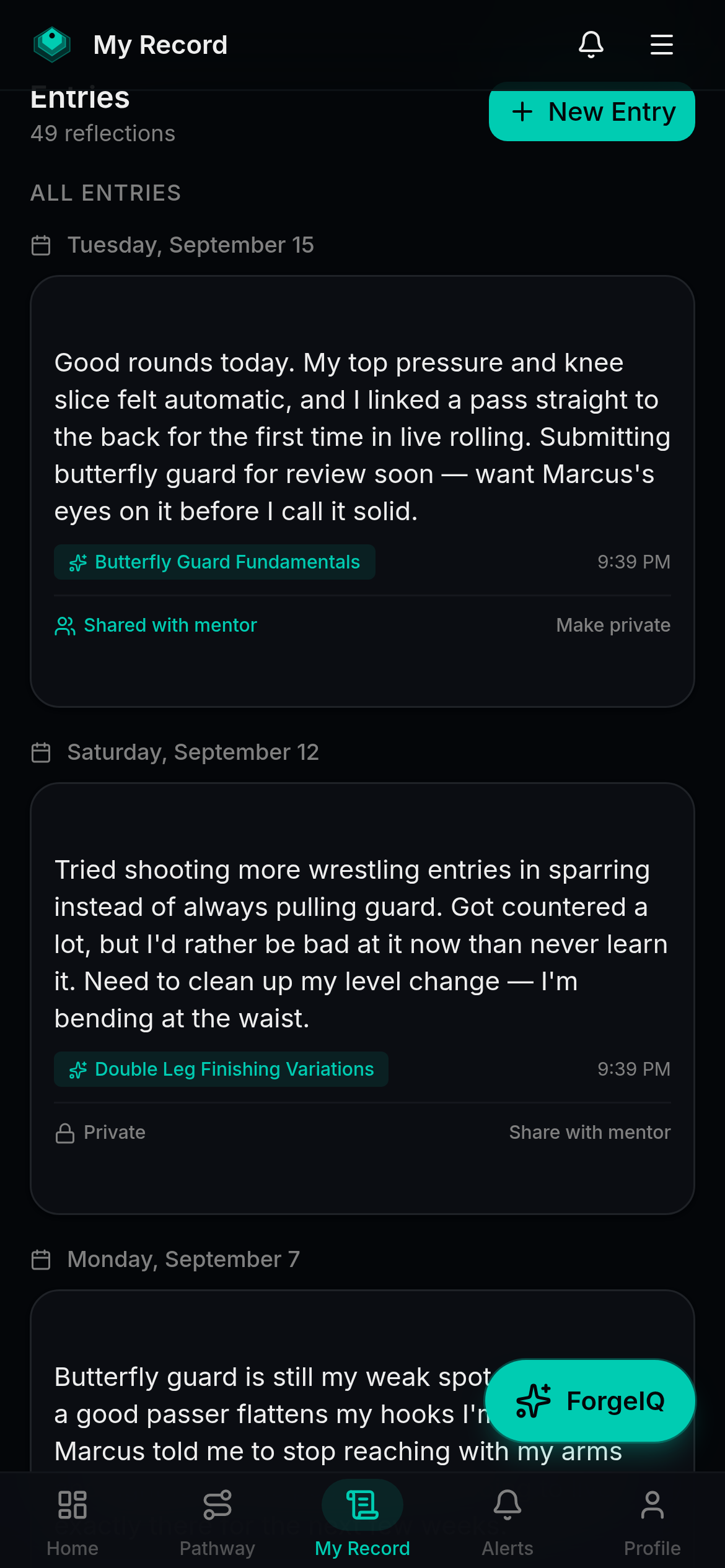
Capture what clicked after every session. Keep it private, or share it with your mentor.
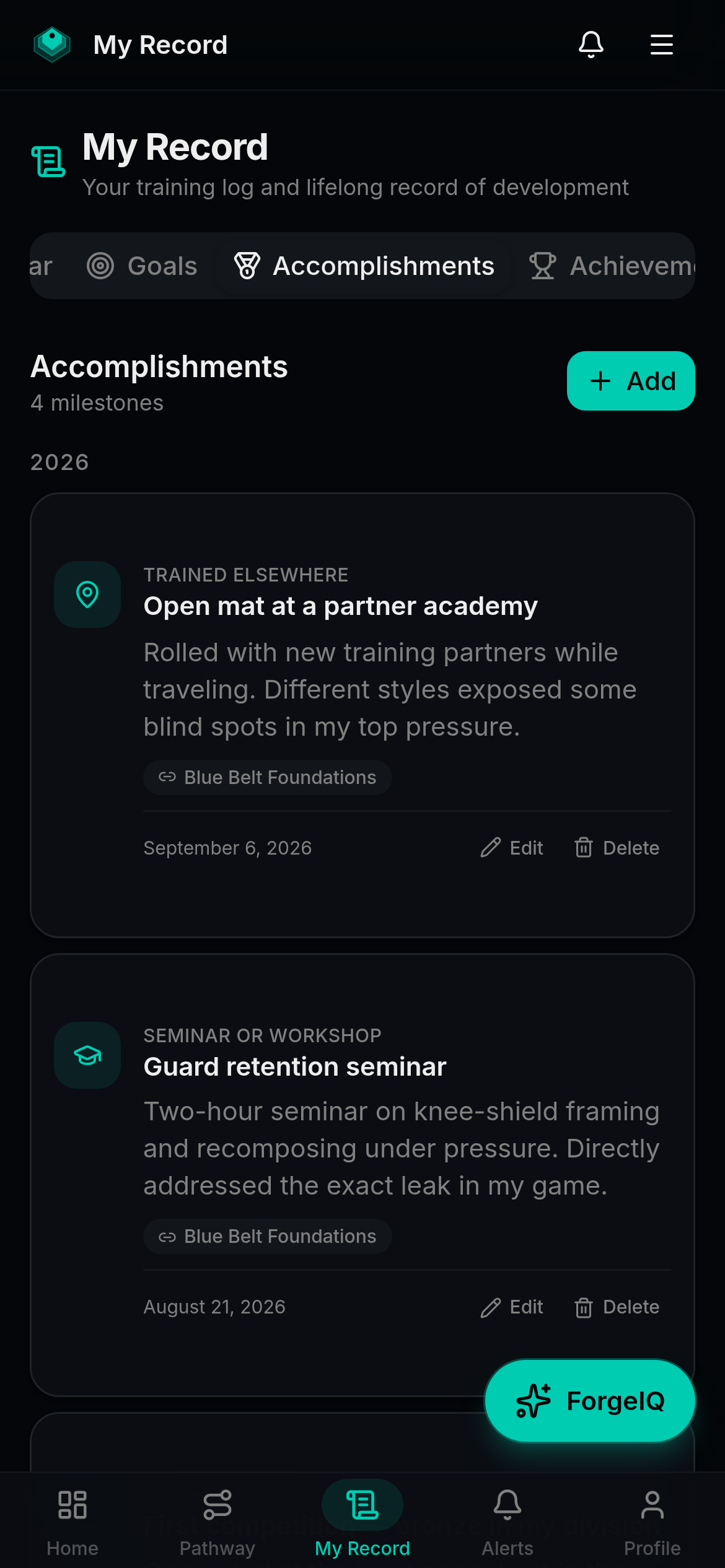
Meaningful milestones mark real progress, from a first rep to verified mastery.
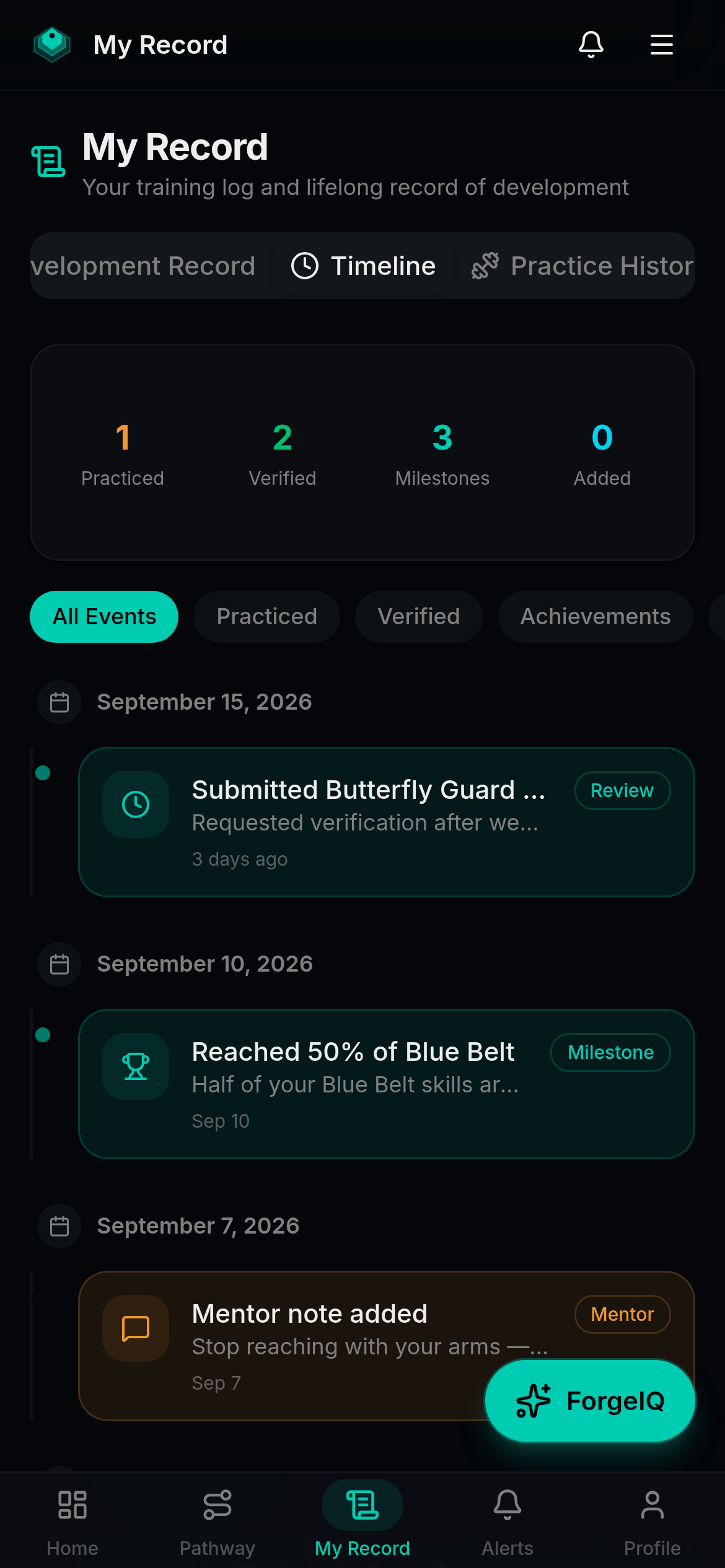
Every practice, verification, and milestone, recorded in order as your journey unfolds.
Pathways guide what to learn. Practice builds experience. Mentors verify competency. Journals preserve lessons, and milestones mark growth. Together, they become your lifelong Development Record.
One record that proves the work.
Skills, milestones, practice history, achievements, journals, and your development timeline come together in My Record, a complete development summary built automatically from your real activity and the work your mentor has verified.
“Your development history is permanent. Every skill forged becomes part of your story.”
Capture your development the moment it happens.
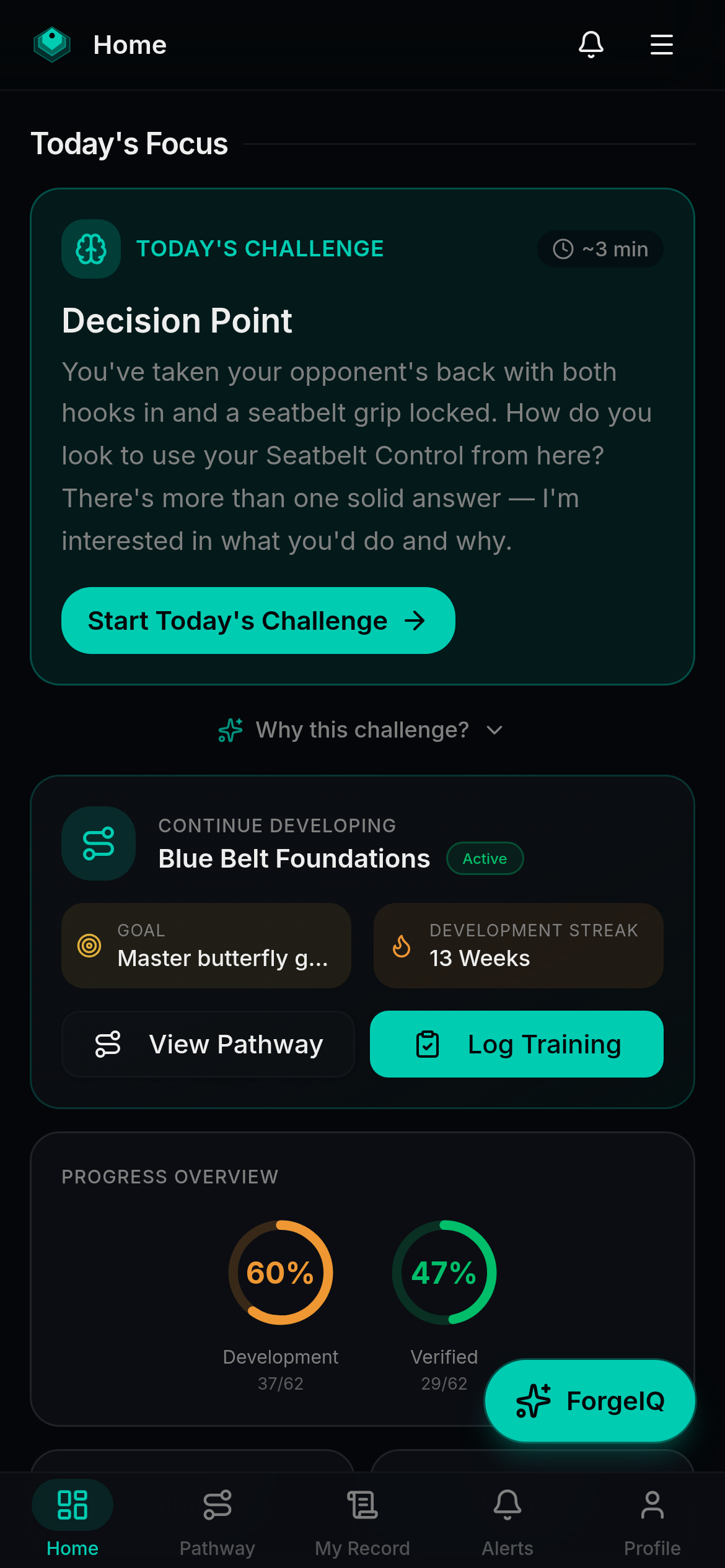
Forgement comes with you to the mat, the gym, the job site, or the field. Add a session, capture a reflection, or request verification right from your phone, while it is still fresh. Every entry adds to your Development Record.
Growth Should Not Be Left to Chance
The most capable people are not developed accidentally.
They improve through structure, accountability, mentorship, and consistent effort.
Forgement exists to help make that process visible, measurable, and intentional.